Julian Calendar Date 2023
Julian Calendar Date 2023 – Welcome to, in this post you will get 2023 Julian calendars in portrait and landscape absolutely FREE to download. You will also get information such as "what is the Julian date and the Julian calendar?" and other related information you may like.
The Julian date, commonly known as the Julian day, is the total number of days that have elapsed since the beginning of the 7,980-year cycle that began on January 1, 4713 BC. and ends on January 22, 3268.
Julian Calendar Date 2023

It was developed in the 16th century by Joseph Scaliger. Various traditional time cycles, such as the solar cycle, the lunar cycle and the Roman tax cycle, were used to calculate the length of the cycle, from which 7980 came out as a common multiple, thus justifying the number of years in the cycle.
At A Glance Monthly Wall Calendar
A full day of the Julian date is counted from one noon to the next. Therefore, you may encounter decimal fractions as part of it. Since noon counts as a day, 18:00 counts as a quarter of a day or 0.25, midnight as half a day or 0.5, and 6:00 is three quarters or 0.75 of a day.

The number of days can be easily calculated with our modern calendar. You must count the number of days that have passed since the beginning of the cycle in 4713 BC. Then on the day of the calculation you need to add the approximate decimal for the time.
Let's say you want to convert a 2015 date to a Julian date. First count the years between 4713 BC (the beginning of the cycle) and 2015

Calendar 2023 New Year May Calendar Names Of The Days Of The Week Month Png, Clipart,
Thus the total number of years between 4713 BC and 2015 is 6729 years. Now count the number of leap years in these 6729 years.
Note: Until 1582 every four years was considered a leap year, but after 1582 the situation changed somewhat. After 1582, every year divided by four and four hundred was considered a leap year. Therefore, 1600 is a leap year and 1700 is a non-leap year.

Multiply the number of leap years by 366 and the number of non-leap years by 365. Now add two totals and subtract ten from them for the change in calendar type that occurred when we switched from the Julian to the Gregorian (modern) calendar in 1582.
Free Printable Julian Calendar 2023
Count the number of days from January 1 to the date you convert to a Julian date. Remember to add an extra date for a leap year because there are 29 days in February in a leap year. Let's say you calculate the date as February 15th. So the total number of days between January 1 and February 15 is 46.

Now calculate the time that has passed since noon on that day and convert it to an approximate decimal number. For example, the calculation time is 16:25:15. Count the number of seconds that have passed from noon to this time. That will be 20,415 seconds.
If the time was 4:25:15, add leap seconds since noon of the previous day, plus midnight.

Monthly Wall Calendar Jul 2022 To Dec 2023 15* 11.5 Large Blocks With Julian Dates Twin Wire Binding Suitable For Hanging
Divide 20,415 by the total number of seconds in a day to get a fractional value divisible by 86,400.
People often confuse the Julian date with the Julian calendar. Julius Caesar introduced the Julian calendar in 46 BC. This was a reform of the Roman calendar that came into effect in 45 BC, shortly after the Roman conquest of Egypt. After its introduction, it was widely used in most parts of the world, including Europe and America, which were under European settlement. According to the Julian calendar, each year had 365.25 days. It was divided into 12 months, with each month having 30 or 31 days, except February, which had 28 days in the year. So every four years had 366 days, and an extra day was added to February, making it a month of 29 days. However, it was not February 29. Instead, February 23 happened again.

The problem with the Julian calendar was that it depended on astronomical phenomena. This caused a serious problem when astronomical events such as the vernal equinox and winter solstice occurred. As a result, there were only 19 days in North America in September 1752, when the days between September 2 and 14 were skipped. The Gregorian calendar we use today replaced the Julian calendar when the leap year formula was changed in 1752. January 1 was celebrated as the first day of the new year, moved from March 25. This resulted in a reduction of 11 days in September 1752.
Buy 2022 Calendar
It is very easy to understand the Julian calendar. It is mainly used in food products to determine the production date of a certain product. The first two digits are the last numbers of the year, while the three digits after that represent the day of the year.

Joseph Scaliger introduced Julian to date in the 16th century. Julius Caesar introduced the Julian calendar in 46 BC. after the Roman conquest of Egypt, the Gregorian calendar replaced it in 1528 and is still in use today. However, there are still places where the Julian calendar is used, such as the Eastern Orthodox Church and some parts of the Oriental Orthodoxy.
Martha is the face of the calendarkart blog, a professional and mother of a sweet boy. It all started at the end of 2018 when I realized the value of disc planning and really started to make significant progress towards my bigger goals. Now I want to help you do the same. I usually design printable planning forms such as calendars, planners and planning templates. The design is minimalistic, useful and fun. I am sure you will enjoy using them. The Julian calendar was created in 45 BC. and has been used for thousands of years. Only at the end of the 19th century and the beginning of the 20th century did the last countries adopt the new Gregorian calendar that we use today. Despite this, in some regions of the world what is commonly known as the Old Style calendar is used.

At A Glance Panoramic Landscape Monthly Desk Pad
Julius Caesar of the Roman Empire is often credited with suggesting the use of the Julian calendar. The idea was to harmonize the Roman civil calendar with the solar calendar, which, when the Julian calendar was used, differed by three months. Before this reform, the Roman civil calendar consisted of 12 months and only 355 days. After many changes, the Julian calendar was the first in which the number of days in a year became what we now see as 365.
If you want to delve deeper into the history of this calendar, look at Wikipedia and Britannica.

Curious, what is the Julian date today? Use the format yydddd (year and day number). For example, if today is March 29, 2022, the year will be "22" and the Julian day will be "088". Therefore, the Julian date of March 29, 2022 is 22088. The Julian calendar was introduced by Julius Caesar to create a more standardized calendar and replaced the complex Roman lunar calendar. In 1582, the Gregorian calendar, which we still use today, replaced the Julian calendar to better align the calendar dates with the equinoxes and the solstices. Despite this, the Julian calendar survives and is still used in astronomy to this day. A modified version is also widely used by the military for MRE (Meal, Ready-to-Eat) and the food industry to track dates. In this case, the Julian date refers to a specific day of the year.
Icon Calendar: Saints And Martyrs Of The Early Church (first To Third Centuries), Julian Version, Old Calendar
At Natural Grocers, we use julienne dates to track the day our bulk products are packed. The date is indicated next to the barcode in the format XX-XXX. The first two digits are the last digits of the year, and the three digits after the hyphen are the day of that year. For example, Julian date 21-001 represents the first day of 2021, or January 1, 2021, and Julian date 22-165 represents the 165th year.
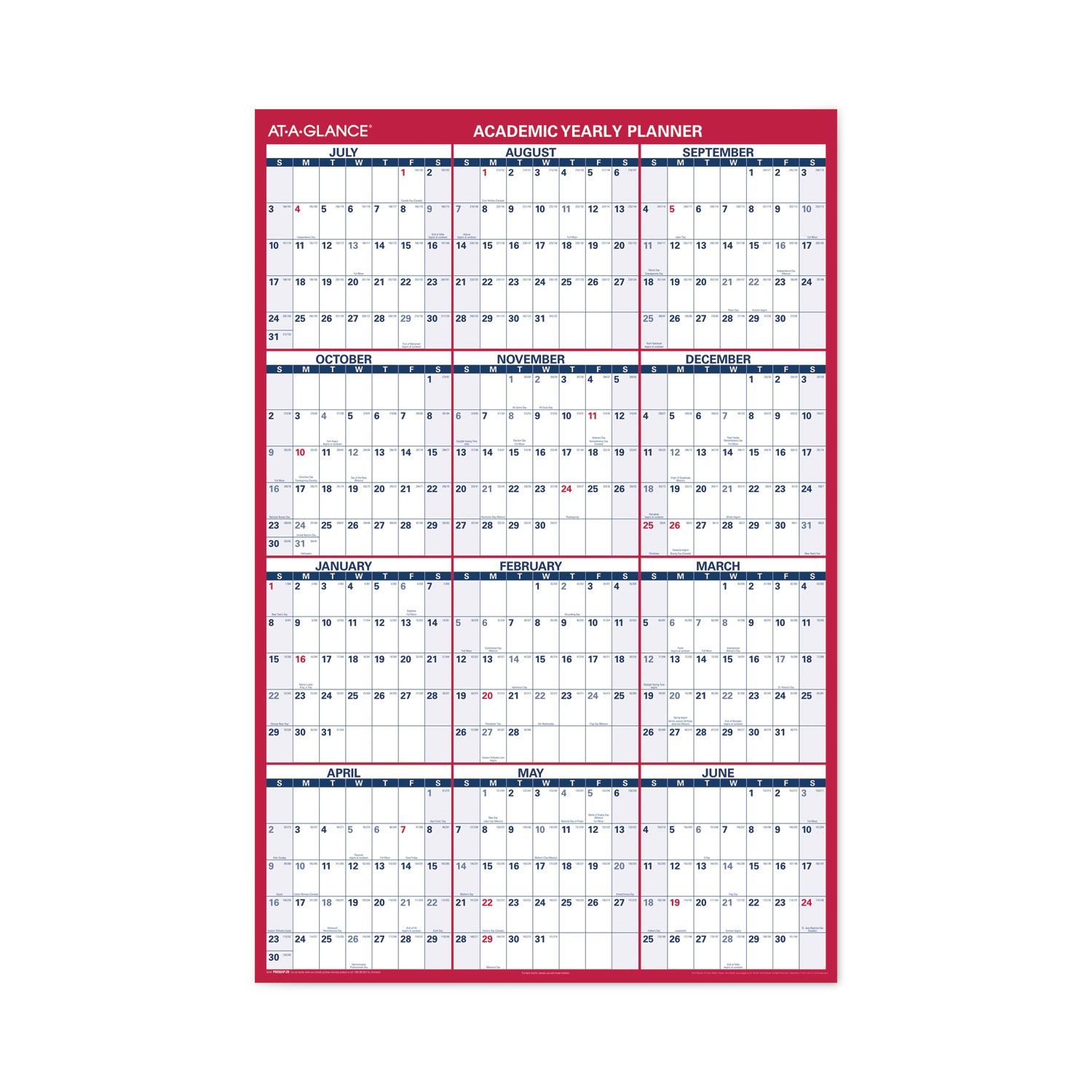
Day 2022 or June 14, 2022. You can use the calendars below to indicate the exact day that your bulk product is packed. The Julian calendar was based on the rotation of the earth around the sun. It replaced the complex Roman calendar. Unlike the Roman calendar, which was based on the phases of the moon, the Julian calendar was based on the rotation of the earth around the sun.
Julius Caesar invented the Julian calendar in 46 BC. Julius did not do all the work alone; he was helped by Greek astronomers and mathematicians such as Sosigenes.

At A Glance Illustrators Edition Monthly Wall Calendar
The Earth takes approximately 365 days, 5 hours, 48 minutes and 45 seconds to complete one revolution around the Sun. Inspired by this information, Julius and his team developed a 365-day calendar.
The Julian calendar has two types of year: a leap year and a common year. Every four years there is a leap year with 366 days on the calendar. An extra day was added to February, the last month of the Julian calendar year. On average, a year consists of 365 days divided over 12 months.

A leap year is an average of 365.25 days, and
Post a Comment for "Julian Calendar Date 2023"